Sport guide · Speed
Motorsport
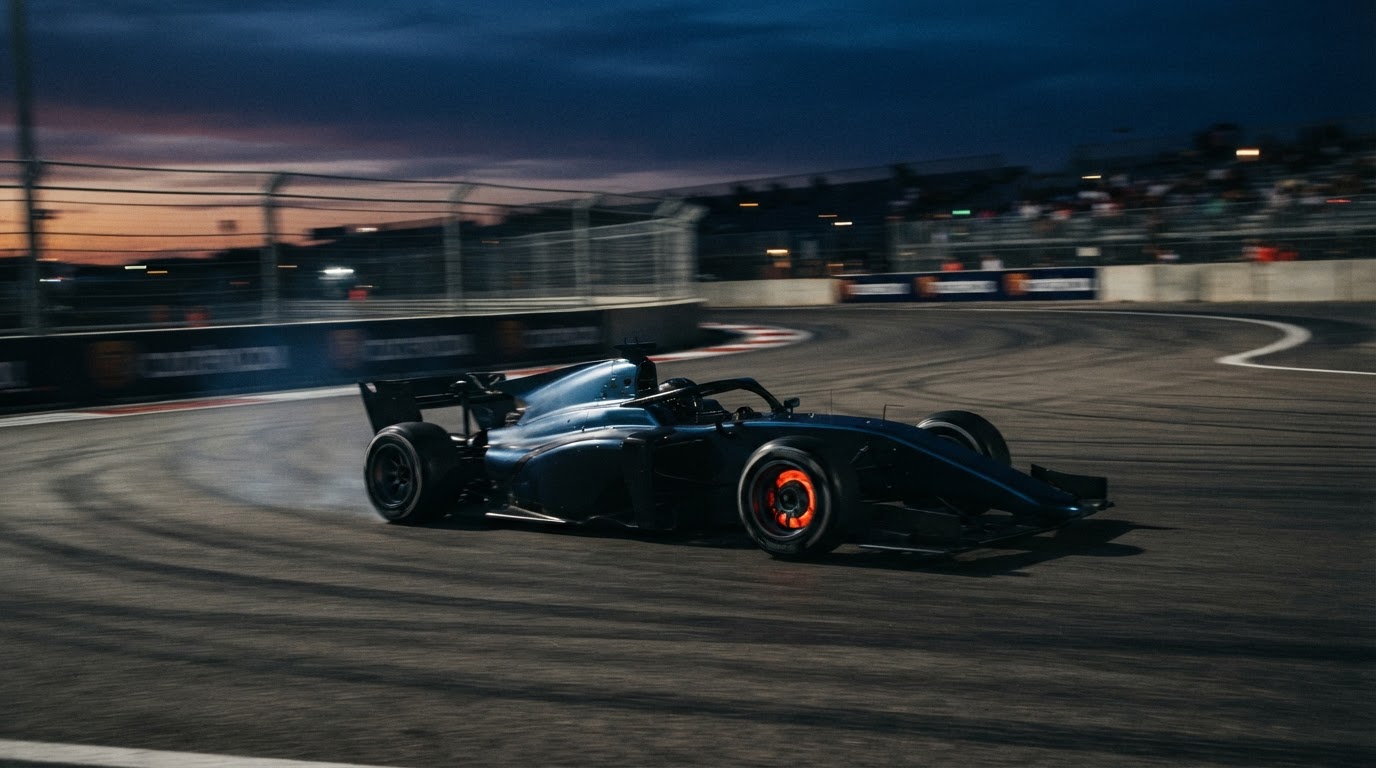
Where engineering meets courage. From Formula 1 circuits to forest rally stages, motorsport tests machines and drivers to the limit.
1950
first Formula 1 World Championship race, at Silverstone
24 h
non-stop racing at Le Mans, held since 1923
25
points for a Formula 1 race win
1973
the World Rally Championship begins
The main forms of motorsport
Formula 1
The top level of single-seater circuit racing. Each Grand Prix weekend includes practice, a three-part qualifying session that sets the starting grid, and the race itself. The top ten finishers score points on a 25-18-15-12-10-8-6-4-2-1 scale. There are two championships: one for drivers and one for teams, known as constructors.
Rallying
Rally drivers race against the clock, one car at a time, on closed public roads of gravel, snow, asphalt or mud. A co-driver reads “pace notes” describing every corner ahead. The crew with the lowest combined time across all special stages wins.
Endurance racing
Teams of drivers share one car over six, twelve or even 24 hours. Reliability, fuel strategy and clean driving through traffic of different car classes matter as much as raw speed. The 24 Hours of Le Mans is the most famous event.
Motorcycle racing
MotoGP is the premier class of the Grand Prix motorcycle world championship, which dates back to 1949. Riders lean their bikes at extreme angles through corners, using knee and elbow sliders that brush the track surface.
Racing flags explained
- Green: the track is clear and racing can continue.
- Yellow: danger ahead. Slow down and no overtaking.
- Red: the session is stopped.
- Blue: a faster car is about to lap you and you must let it through.
- Chequered: the end of the race or session.
A short history
Motor racing began almost as soon as the car was invented. City-to-city road races in France in the 1890s drew huge crowds, but racing on open public roads proved dangerous, which pushed the sport onto closed circuits. The Indianapolis 500 was first run in 1911 and Le Mans in 1923. The Formula 1 World Championship began on 13 May 1950 at Silverstone, and Italy’s Giuseppe Farina became its first champion.
Safety has transformed the sport. Carbon-fibre survival cells, energy-absorbing barriers, HANS head-and-neck supports and the “halo” cockpit protection, made mandatory in F1 in 2018, have made modern racing far safer than in the decades when fatal accidents were common.
Did you know?
- Michael Schumacher and Lewis Hamilton share the record of seven Formula 1 drivers’ titles each.
- The “Triple Crown of Motorsport” means winning the Monaco Grand Prix, the Indianapolis 500 and the 24 Hours of Le Mans. Only Graham Hill has completed it.
- Modern F1 cars generate so much downforce that, in theory, they could drive upside down in a tunnel at high speed.
- The Monaco Grand Prix is run on the city’s ordinary streets, closed off for the race weekend.
Key terms
- Pole position: the first starting place on the grid, earned by the fastest qualifier.
- Pit stop: a stop in the pit lane to change tyres, refuel (where allowed) or make repairs.
- Safety car: a car that leads the field at reduced speed while an incident is cleared.
- Slipstream: following closely behind another car to reduce air resistance and gain speed.
Explore more sports

Ice Hockey
Periods, icing, power plays and the story of the Stanley Cup.

Football
Offside, cards and VAR explained, plus the story from 1863 to the World Cup.

Athletics
Sprints, jumps, throws and the marathon, with the key rules explained.